
Comfort drives adherence
Bulky or confusing hardware leads to skipped study nights, repeated tests, and noisy program outcomes.
Use this scorecard when you evaluate a home sleep test device manufacturer or compare bids from a portable sleep monitor supplier for overnight diagnostic programs. The PM50 gives you a concrete benchmark: nine tracked parameters, HSAT Type III/IV positioning, Bluetooth and cloud data flow, and a battery designed to cover the night.

Procurement teams often compare price and spec sheets. In a home sleep testing program, the real comparison happens inside a quiet bedroom at 2 a.m. — when hardware comfort, data fidelity, and support are put to the test.
Bulky or confusing hardware leads to skipped study nights, repeated tests, and noisy program outcomes.
If clinicians cannot quickly interpret the sleep report, the device produces data that slows decisions rather than supporting them.
A monitor that strands information on the device breaks remote patient monitoring workflows and forces manual rework.
Overnight tests fail. The supplier that answers when a study is running is the supplier that protects your completion rate.
Consumables, replacements, reprocessing, and packaging surprises decide whether a pilot scales into a sustainable program.
Procurement, clinical review, and launch timelines slow down when regulatory answers are vague or delayed.
Use this reusable RFP framework before brand preference enters the room. It keeps every candidate on the same evaluation field.
Why it matters: A sleep diagnostic program depends on the signals captured overnight and the clarity of the resulting report.
Ask every supplier:
Why it matters: Night data is only as valuable as its path from the patient’s wrist to a clinician’s review queue.
Ask every supplier:
Why it matters: Consumable choices determine whether a 100-patient pilot becomes an affordable 5,000-patient program.
Ask every supplier:
Why it matters: Programs mature faster when hardware, software, and packaging can flex with your brand and clinical workflow.
Ask every supplier:
Why it matters: Launch delays are rarely caused by hardware alone — they are caused by missing technical files and unclear documentation.
Ask every supplier:
Why it matters: Home sleep programs run overnight. Late hardware and quiet support desks create lost studies and unhappy referring clinics.
Ask every supplier:
The PM50 gives you a concrete set of product-led answers to test against the six criteria above.

The PM50 tracks nine critical physiological indicators, including SpO2, pulse rate, ECG, respiratory rate, nasal airflow, body position, blood pressure trends, and abnormal heart rhythm alerts. Its advanced sleep chest breathing analysis monitors chest breathing and nasal airflow simultaneously, giving clinicians data that helps distinguish obstructive apnea from central apnea.

Bluetooth enables real-time syncing with dedicated health apps, data aggregation, and multi-graph sleep report generation. Wireless transmission supports cloud-based remote monitoring platforms, and data interfaces support aggregation into hospital information management systems.

The PM50 is a compact, watch-sized device built for overnight monitoring in hospital and home environments. Its rechargeable battery supports up to 10 hours of continuous use, and the modular sensor design can be integrated with reusable or disposable components to help reduce operational costs and improve hygiene at program scale.
| Scorecard Criterion | PM50 Answer to Verify | Buyer Action |
|---|---|---|
| 1. Clinical accuracy | HSAT Type III/IV wrist-wearable monitor with nine-parameter tracking and dual-channel chest breathing plus nasal airflow. | Ask Berry for a representative sleep report before the demo. |
| 2. Data openness | Bluetooth health-app sync, cloud-based remote monitoring, and hospital information system data interfaces. | Map the data path to your RPM/EMR architecture. |
| 3. Reusable/disposable model | Modular sensor design supports reusable or disposable components for cost and hygiene control. | Confirm which components are single-use at your volume. |
| 4. Manufacturer flexibility | Berry is the manufacturer behind the PM50 page, and the primary product-page action is quote-based, not add-to-cart. | Use the quote conversation to discuss configuration and packaging needs. |
| 5. Regulatory documentation | The product page positions the PM50 as clinical-grade and HSAT Type III/IV for hospital and home health environments. | Request the technical documentation relevant to your target market. |
| 6. Program operations | Compact watch-sized form, 10-hour rechargeable battery, and Bluetooth/cloud data transfer for overnight studies. | Ask about lead times, demo units, and study-night support. |
The PM50 product page is quote-led rather than cart-led. That is the right model for program procurement: you are not buying one monitor, you are building a repeatable sleep diagnostic workflow.
Ask to see a full overnight report, a raw data export sample, and the list of compatible cloud or hospital interfaces. Those three artifacts answer most of the scorecard before the pilot begins.
Keep adjacent product options together for a faster catalog comparison.

BM1000 fingertip pulse oximeter: professional FDA-certified remote patient monitoring devices for clinical use. Reliable multi parameter patient monitor data.
View product
4G LTE and Bluetooth 5.0 gateway provides plug-and-play integration for multi parameter patient monitor systems, ideal for remote patient monitoring devices.
View product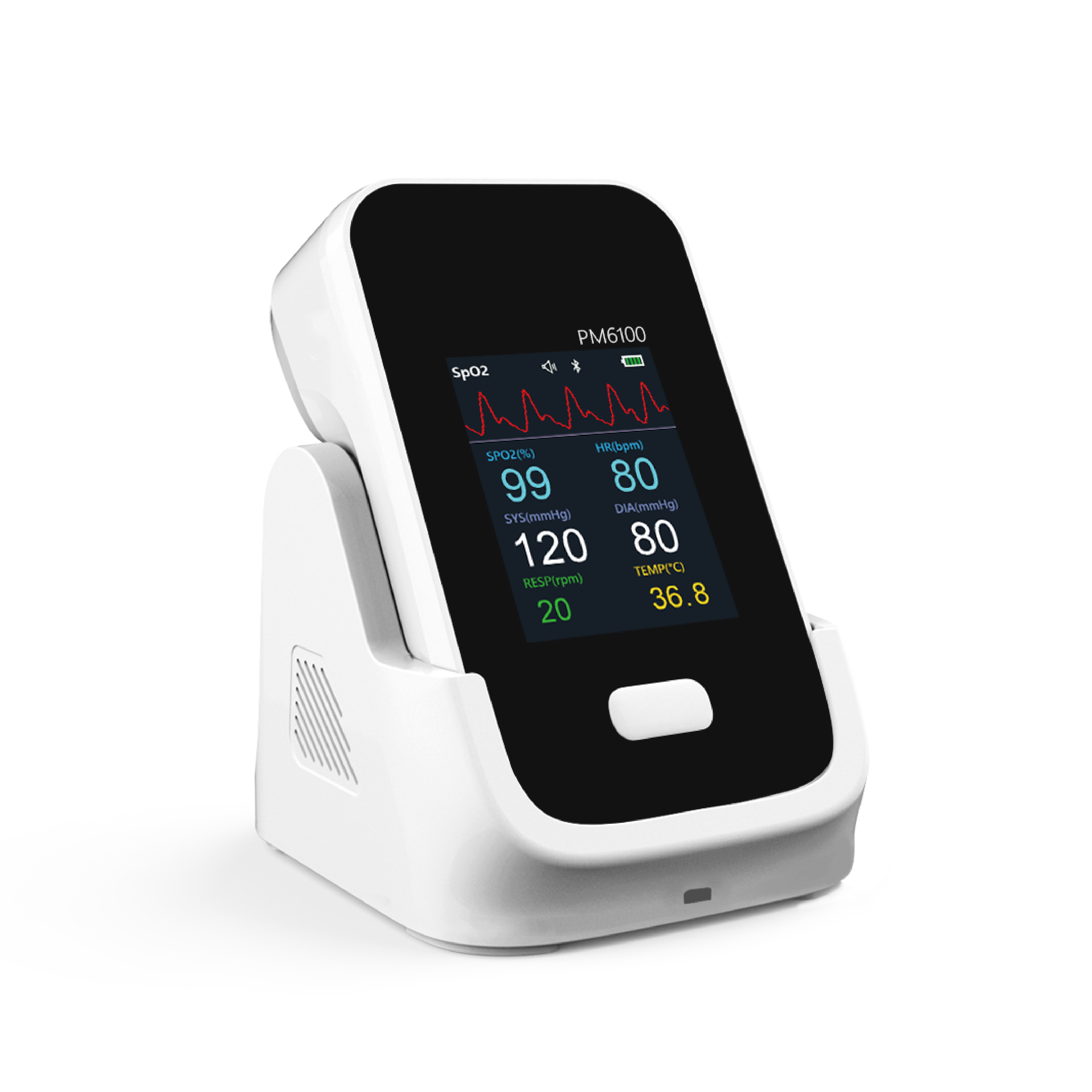
Engineered for clinical precision, the PM6100 is a portable patient monitor providing continuous vital tracking. Reliable for remote patient monitoring devices workflows.
View producton the product page, berry positions the pm50 as a home sleep test type 3 device and an hsat type iii/iv wrist-wearable multi-parameter sleep diagnostic monitor for hospital and home environments.
berry’s product description lists tracking of nine critical physiological indicators, including spo2, pulse rate, ecg, respiratory rate, nasal airflow, body position, blood pressure trends, and abnormal heart rhythm alerts.
simultaneous monitoring and recording of chest breathing and nasal airflow gives clinicians dual-channel data designed to help distinguish obstructive apnea from central apnea.
yes. the pm50 uses a rechargeable battery that supports up to 10 hours of continuous use, which is enough for a full overnight monitoring session.
bluetooth syncs data to dedicated health apps, wireless transmission supports cloud-based platforms for remote monitoring, and data interfaces support aggregation into hospital information management systems.
the pm50’s modular sensor design allows integration with reusable or disposable components, with the goal of reducing operational costs and improving hygiene in a large sleep program.
